We know with those heavy-duty names and all that science behind them, it can get difficult to differentiate between prescription lenses. While finding the right pair of prescription lenses is one aspect, knowing what lens goes with it is a whole different ball game!
But hey, what are we here for, right? We give you a basic 101 you can get acquainted with if you’re planning to buy prescription glasses for yourself or family. Yes, you may not get to choose the lens but it’s always great to know what you’re paying for
Types Of Prescription Lenses
1 Single Vision Lenses
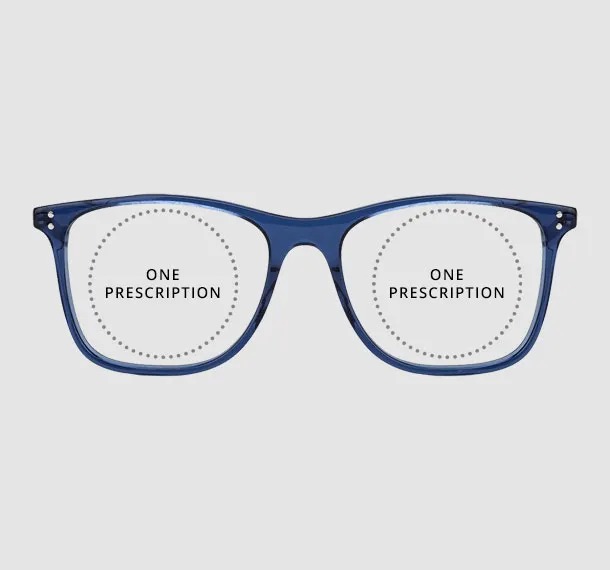
What is it: Single vision lens corrects one field of vision, near or far.
These lenses are the most basic type that come with your prescription glasses. And, it goes without saying that they are the most inexpensive ones too. These lenses as defined before, have just a single optical prescription correction and they distribute focus evenly over the entire surface area of the lens. They are ideal for correcting myopia (near-sightedness) and hyperopia (far-sightedness), and astigmatism.
2 Photochromic Lenses
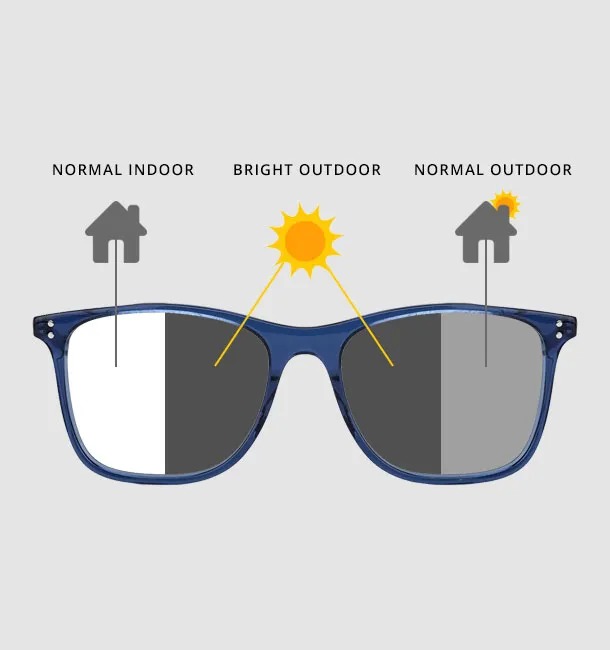
What is it: Photochromic or Transition lenses double up as sunglasses when hit by UV rays.
These lenses are technically not prescription lenses, but a treatment added to prescription lenses; for instance, photochromic bi-focals or trifocals. They are known to darken when you step out in the sun. This eliminates the need of sunglasses, thereby cutting down your expense and adding to your convenience.
Additionally, it is good to know that these lenses darken even on cloudy days, which may seem inconvenient to a few, but a bit of style never goes wrong, does it?
2 Bifocal and Trifocal Lenses
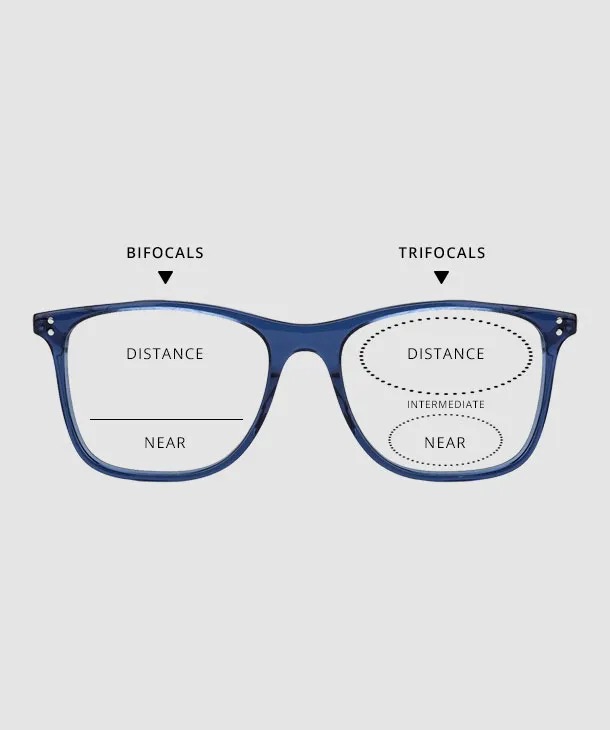
I’m What are they: Bifocals are lenses with two powers and trifocals are lenses with three powers.
Remember your granny wearing those glasses that had a half circle at the bottom half of the lens? These are made to correct near and farsightedness. They are also known as ‘multi-focals’ at times, although that just means that they are progressive lenses. With bifocals and trifocals, you have separate sections for near and distance correction in one pair of glasses making it a versatile choice.
However, with these glasses comes a tiny drawback. The lines separating each vision make you move your eyes accordingly, thereby making your vision a bit jumpy. One does, however, get accustomed to it eventually.
4 Progressive Lenses
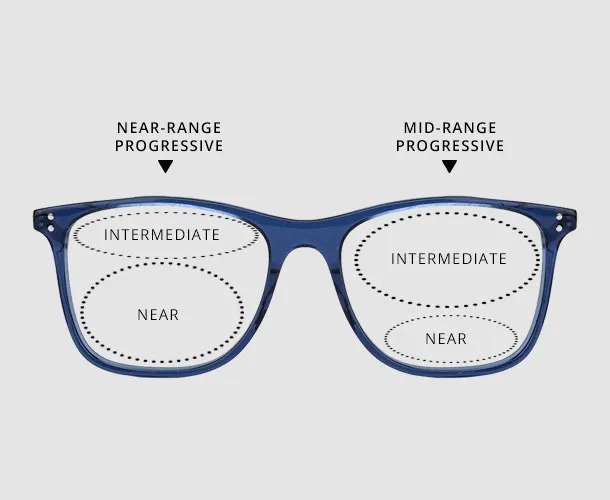
What is it: Progressive lenses are not much different from bifocals or trifocals. In fact, it is just an upgraded version of them.
These lenses do not have separating lines like bifocals and trifocals do, making it easy and convenient for you to see seamlessly without any visual jumps. With progressive lenses, transitions from “near” to “intermediate” to “distance” correction are much smoother. The only downside to these eyeglasses is that it takes a minimum of 20 days to get used to, and may cause headaches initially.
5 Computer Lenses
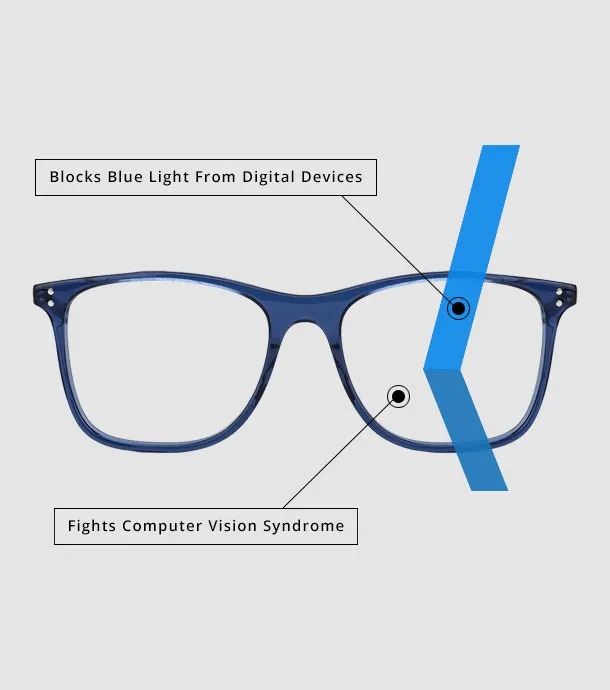
What is it: Computer lenses or screen lenses reduce the chances of getting a computer vision syndrome.
While these are not exactly prescription lenses, we are listing them here because they are becoming increasingly ubiquitous by the day. Usage of electronic devices have shot up, be it among teenagers, children or even adults. Spending hours in front of a computer screen or phone screen affect the eyes in the long run. Computer glasses not only protect your eyes from the blue light emitted from screens, but also reduce UV glare. What does this mean? It’s simple. Wearing computer lenses reduces your chances of getting computer vision syndrome- symptoms include headaches, itching and eye strain.